Not sure if your business IT is protected?
We can review your current setup, identify weak spots, and help you understand what should be fixed first.
Schedule a Security Review
Call 541-286-6868

Managed IT & Cybersecurity for Businesses in Hood River, The Gorge, The Dalles & Portland
Managed IT & Cybersecurity for Businesses in Hood River, The Gorge, The Dalles & Portland
Encircle Technology helps small and mid-sized businesses stay secure, productive, and supported with local IT management, cybersecurity, Microsoft 365, networking, backups, and phone systems.

Chief Executive Officer Robert Timlick
We provide a variety of support and maintenance resources to keep your business technology running smoothly.

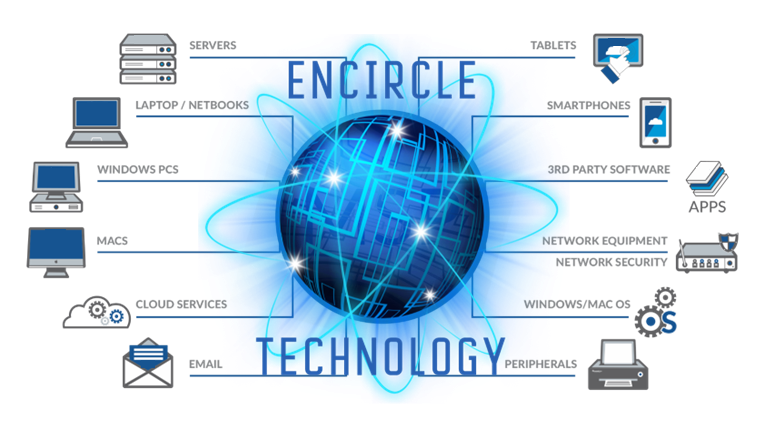
At our organization, we provide comprehensive technology management services, overseeing your infrastructure, systems, and data security with care and precision. With our experienced team, you can focus on growing your business with confidence, knowing that your IT needs are in good hands. From network configurations to cybersecurity measures, we handle every aspect of your technology, ensuring minimal disruptions and optimal performance. As your trusted partners, we offer strategic guidance and innovative solutions to keep you ahead in today’s digital landscape.

At our company, we take pride in offering top-notch helpdesk support services aimed at ensuring the seamless operation of your technology infrastructure. Our team of highly skilled technicians stands ready to swiftly resolve any issues that may arise, providing prompt assistance and ongoing maintenance to keep your systems running smoothly. With our dedicated support, you can rest assured that your technology is in capable hands, freeing up valuable time for you to concentrate on driving the success of your business forward. Count on us to deliver reliable assistance and proactive maintenance, allowing you to stay productive and focused on your core objectives.

At our organization, we specialize in creating high-quality websites tailored to your unique needs and objectives. Using the latest web development technologies, we ensure that each site we build is visually appealing, fast-loading, and secure. Our expert team focuses on showcasing your business effectively, employing innovative design strategies and cutting-edge coding practices to engage visitors and drive conversions. With our commitment to excellence, you can trust us to deliver a website that exceeds your expectations and helps you achieve your business goals.

Upgrade your communication with our advanced VoIP solutions! Leave behind outdated phone lines and embrace seamless, cost-effective calling via the internet. Whether you’re a startup or a large enterprise, our VoIP services offer clear voice quality, unmatched reliability, and scalable options to suit your needs. Enjoy unified communication, increased productivity, and significant savings on your monthly bills. Switch to VoIP today for smarter business communication!

EnCircle Technology specializes in ensuring your data security and regulatory compliance. Our services include expert guidance on best practices, thorough security audits, and effective risk mitigation measures. With us, your business can confidently navigate the complexities of data protection, knowing that your valuable information is safe and regulations are met.

EnCircle Technology specializes in cloud support services designed to optimize infrastructure, bolster security, and enhance scalability. With our expertise across various cloud platforms, we offer tailored solutions to minimize disruptions and meet your specific needs effectively. From seamless migrations to robust security implementations, trust us to empower your digital transformation journey.

We can review your current setup, identify weak spots, and help you understand what should be fixed first.
Schedule a Security Review
Call 541-286-6868