-

Notepad++ Fixes Hijacked Update Mechanism Used to Deliver Targeted Malware
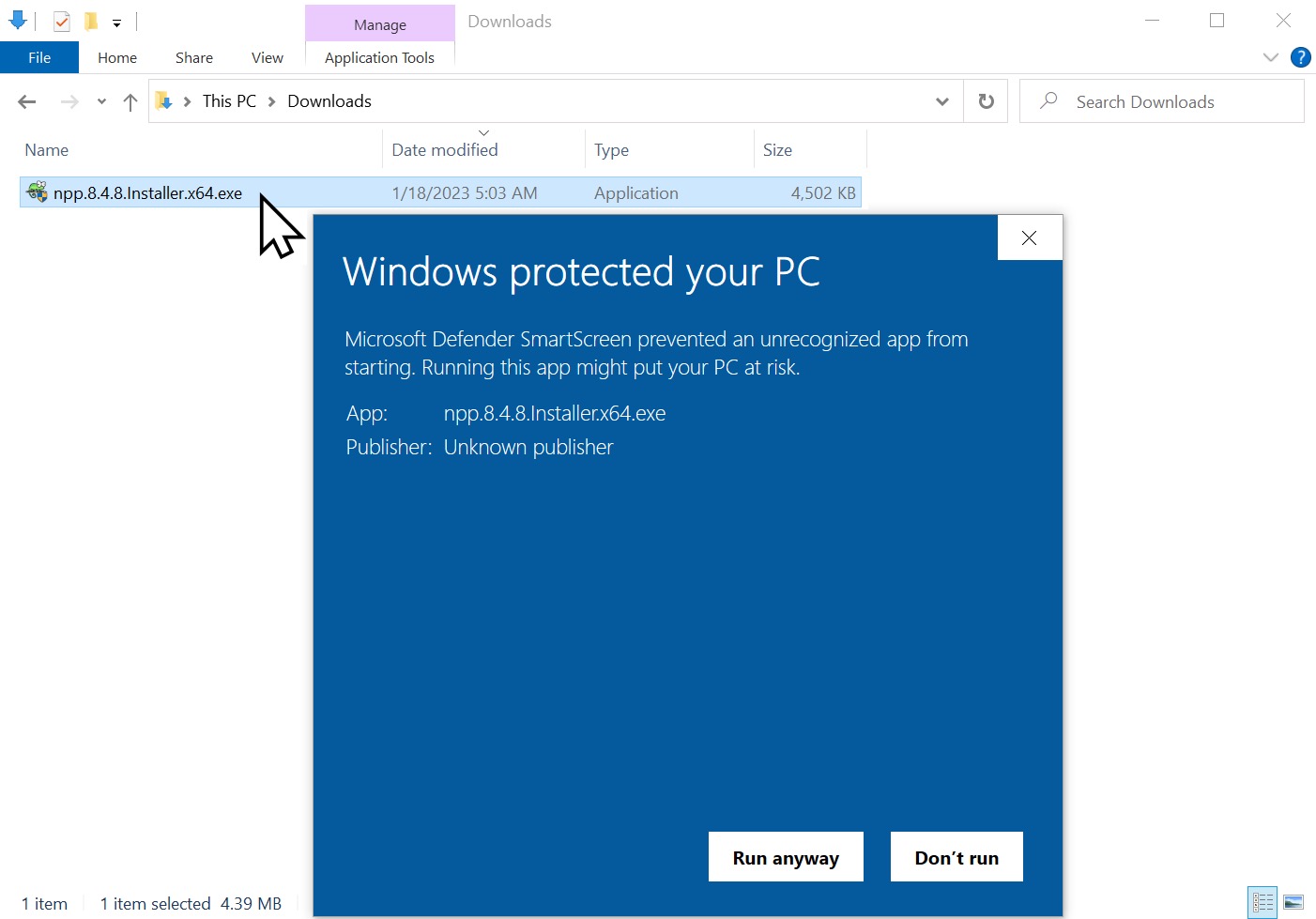
Notepad++ has released a security fix to plug gaps that were exploited by an advanced threat actor from China to hijack the software update mechanism to selectively deliver malware to targets of interest. The version 8.9.2 update incorporates what maintainer Don Ho calls a “double lock” design that aims to make the update process “robust…
-

CISA Flags Four Security Flaws Under Active Exploitation in Latest KEV Update
The U.S. Cybersecurity and Infrastructure Security Agency (CISA) on Tuesday added four security flaws to its Known Exploited Vulnerabilities (KEV) catalog, citing evidence of active exploitation in the wild. The list of vulnerabilities is as follows – CVE-2026-2441 (CVSS score: 8.8) – A use-after-free vulnerability in Google Chrome that could allow a remote attacker to…
-

Webinar: How Modern SOC Teams Use AI and Context to Investigate Cloud Breaches Faster
Cloud attacks move fast — faster than most incident response teams. In data centers, investigations had time. Teams could collect disk images, review logs, and build timelines over days. In the cloud, infrastructure is short-lived. A compromised instance can disappear in minutes. Identities rotate. Logs expire. Evidence can vanish before analysis even begins. Cloud forensics…
-

Researchers Show Copilot and Grok Can Be Abused as Malware C2 Proxies
Cybersecurity researchers have disclosed that artificial intelligence (AI) assistants that support web browsing or URL fetching capabilities can be turned into stealthy command-and-control (C2) relays, a technique that could allow attackers to blend into legitimate enterprise communications and evade detection. The attack method, which has been demonstrated against Microsoft Copilot and xAI Grok
-

Keenadu Firmware Backdoor Infects Android Tablets via Signed OTA Updates
A new Android backdoor that’s embedded deep into the device firmware can silently harvest data and remotely control its behavior, according to new findings from Kaspersky. The Russian cybersecurity vendor said it discovered the backdoor, dubbed Keenadu, in the firmware of devices associated with various brands, including Alldocube, with the compromise occurring during the firmware…
-

SmartLoader Attack Uses Trojanized Oura MCP Server to Deploy StealC Infostealer
Cybersecurity researchers have disclosed details of a new SmartLoader campaign that involves distributing a trojanized version of a Model Context Protocol (MCP) server associated with Oura Health to deliver an information stealer known as StealC. “The threat actors cloned a legitimate Oura MCP Server – a tool that connects AI assistants to Oura Ring health…
-

Webinar: How Modern SOC Teams Use AI and Context to Investigate Cloud Breaches Faster
Cloud attacks move fast — faster than most incident response teams. In data centers, investigations had time. Teams could collect disk images, review logs, and build timelines over days. In the cloud, infrastructure is short-lived. A compromised instance can disappear in minutes. Identities rotate. Logs expire. Evidence can vanish before analysis even begins. Cloud forensics…
-

Microsoft Finds “Summarize with AI” Prompts Manipulating Chatbot Recommendations
New research from Microsoft has revealed that legitimate businesses are gaming artificial intelligence (AI) chatbots via the “Summarize with AI” button that’s being increasingly placed on websites in ways that mirror classic search engine poisoning (AI). The new AI hijacking technique has been codenamed AI Recommendation Poisoning by the Microsoft Defender Security Research Team. The…
-

Apple Tests End-to-End Encrypted RCS Messaging in iOS 26.4 Developer Beta
Apple on Monday released a new developer beta of iOS and iPadOS with support for end-to-end encryption (E2EE) in Rich Communications Services (RCS) messages. The feature is currently available for testing in iOS and iPadOS 26.4 Beta, and is expected to be shipped to customers in a future update for iOS, iPadOS, macOS, and watchOS.…
-

Infostealer Steals OpenClaw AI Agent Configuration Files and Gateway Tokens
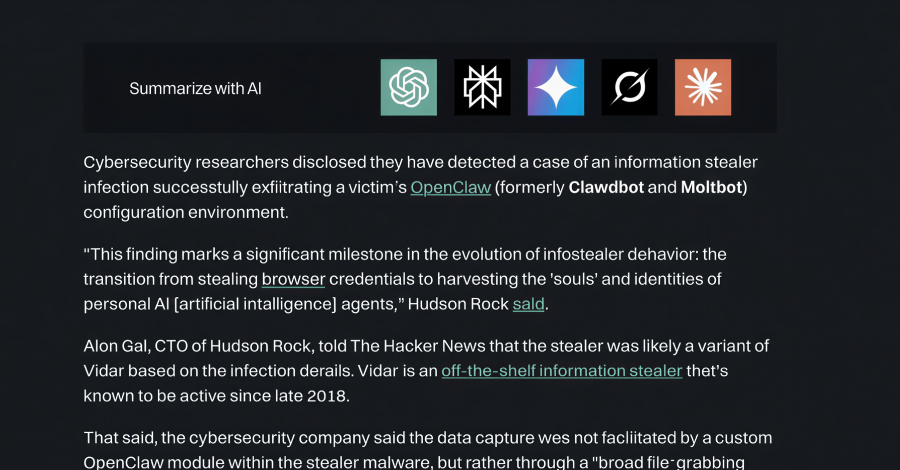
Cybersecurity researchers disclosed they have detected a case of an information stealer infection successfully exfiltrating a victim’s OpenClaw (formerly Clawdbot and Moltbot) configuration environment. “This finding marks a significant milestone in the evolution of infostealer behavior: the transition from stealing browser credentials to harvesting the ‘souls’ and identities of personal AI [