Staying ahead of threats is a challenge for organizations of all sizes. Reported global security incidents grew between February and March of 2024. They increased by 69.8%. It’s important to use a structured approach to cybersecurity. This helps to protect your organization.
The National Institute of Standards and Technology (NIST) created a Cybersecurity Framework (CSF). It provides an industry-agnostic approach to security. It’s designed to help companies manage and reduce their cybersecurity risks. The framework was recently updated in 2024 to NIST CSF 2.0.
CSF 2.0 is a comprehensive update that builds upon the success of its predecessor. It offers a more streamlined and flexible approach to cybersecurity. This guide aims to simplify the framework. As well as make it more easily accessible to small and large businesses alike.
Understanding the Core of NIST CSF 2.0
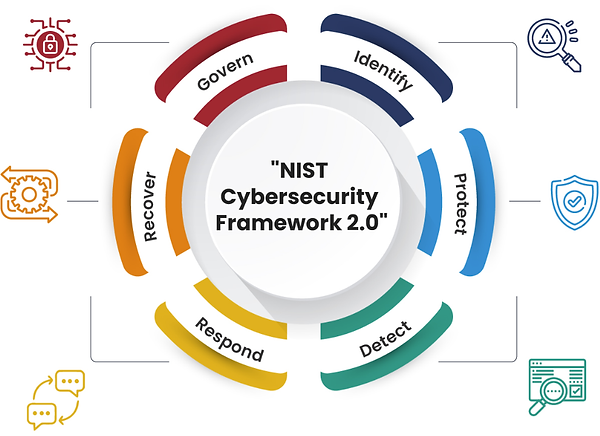
At the heart of CSF 2.0 is the Core. The Core consists of five concurrent and continuous Functions. These are: Identify, Protect, Detect, Respond, and Recover. These Functions provide a high-level strategic view of cybersecurity risk, as well as an organization’s management of that risk. This allows for a dynamic approach to addressing threats.
Here are the five Core Functions of NIST CSF 2.0:
- Identify
This function involves identifying and understanding the organization’s assets, cyber risks, and vulnerabilities. It’s essential to have a clear understanding of
what you need to protect. You need this before you can install safeguards. - Protect
The protect function focuses on implementing safeguards. These protections are to deter, detect, and mitigate cybersecurity risks. This includes measures such as firewalls, intrusion detection systems, and data encryption. - Detect
Early detection of cybersecurity incidents is critical for minimizing damage. The detect function emphasizes the importance of detection, as well as having mechanisms to identify and report suspicious activity. - Recover
The recover function focuses on restoring normal operations after a cybersecurity incident. This includes activities such as data restoration, system recovery, and
business continuity planning. - Respond
The respond function outlines the steps to take in the event of a cybersecurity incident. This includes activities such as containment, eradication, recovery, and
lessons learned. - Recover
The recover function focuses on restoring normal operations after a cybersecurity incident. This includes activities such as data restoration, system recovery, and
business continuity planning.
Profiles and Tiers: Tailoring the Framework
The updated framework introduces the concept of Profiles and Tiers. These help organizations tailor their cybersecurity practices. They can customize them to their specific needs, risk tolerances, and resources.
Profiles
Profiles are the alignment of the Functions, Categories, and Subcategories. They’re aligned with the business requirements, risk tolerance, and resources of
the organization.
Tiers
Tiers provide context on how an organization views cybersecurity risk as well as the processes in place to manage that risk. They range from Partial (Tier 1) to
Adaptive (Tier 4).
Benefits of Using NIST CSF 2.0
There are many benefits to using NIST CSF 2.0, including:
- Improved Cybersecurity Posture: By following the guidance in NIST CSF 2.0, organizations can develop a more comprehensive and effective cybersecurity program.
- Reduced Risk of Cyberattacks: The framework helps organizations identify and mitigate cybersecurity risks. This can help to reduce the likelihood of cyberattacks.
- Enhanced Compliance: NIST aligned CSF 2.0 with many industry standards and regulations. This can help organizations to meet compliance requirements.
- Improved Communication: The framework provides a common language for communicating about cybersecurity risks. This can help to improve communication between different parts of an organization.
- Cost Savings: NIST CSF 2.0 can help organizations save money. It does this by preventing cyberattacks and reducing the impact of incidents.
Getting Started with NIST CSF 2.0
If you are interested in getting started with NIST CSF 2.0, there are a few things you can do:
- Familiarize yourself with the framework: Take some time to read through the NIST CSF 2.0 publication. Familiarize yourself with the Core Functions and categories.
- Assess your current cybersecurity posture: Conduct an assessment of your current cybersecurity posture. This will help you identify any gaps or weaknesses.
- Develop a cybersecurity plan: Based on your assessment, develop a cybersecurity plan. It should outline how you will put in place the NIST CSF 2.0 framework in your organization.
- Seek professional help: Need help getting started with NIST CSF 2.0? Seek out a managed IT services partner. We’ll offer guidance and support.
By following these steps, you can begin to deploy NIST CSF 2.0 in your organization. At the same time, you’ll be improving your cybersecurity posture.
Schedule a Cybersecurity Assessment Today
The NIST CSF 2.0 is a valuable tool. It can help organizations of all sizes manage and reduce their cybersecurity risks. Follow the guidance in the framework. It will help you develop a more comprehensive and effective cybersecurity program.
Are you looking to improve your organization’s cybersecurity posture? NIST CSF 2.0 is a great place to start. We can help you get started with a cybersecurity assessment. We’ll identify assets that need protecting and security risks in your network. We can then work with you on a budget-friendly plan. Contact us today to schedule a cybersecurity assessment.
—
Featured Image Credit
This Article has been Republished with Permission from .