

This week, cyber attackers are moving quickly, and businesses need to stay alert. They’re finding new weaknesses in popular software and coming up with clever ways to get around security. Even one unpatched flaw could let attackers in, leading to data theft or even taking control of your systems. The clock is ticking—if defenses aren’t updated regularly, it could lead to serious damage. The
Author: Robert Timlick
-
6 Lessons Learned: Focusing Security Where Business Value Lives
The Evolution of Exposure Management
Most security teams have a good sense of what’s critical in their environment. What’s harder to pin down is what’s business-critical. These are the assets that support the processes the business can’t function without. They’re not always the loudest or most exposed. They’re the ones tied to revenue, operations, and delivery. If one goes down, it’s more than a -
WinRAR Zero-Day Under Active Exploitation – Update to Latest Version Immediately
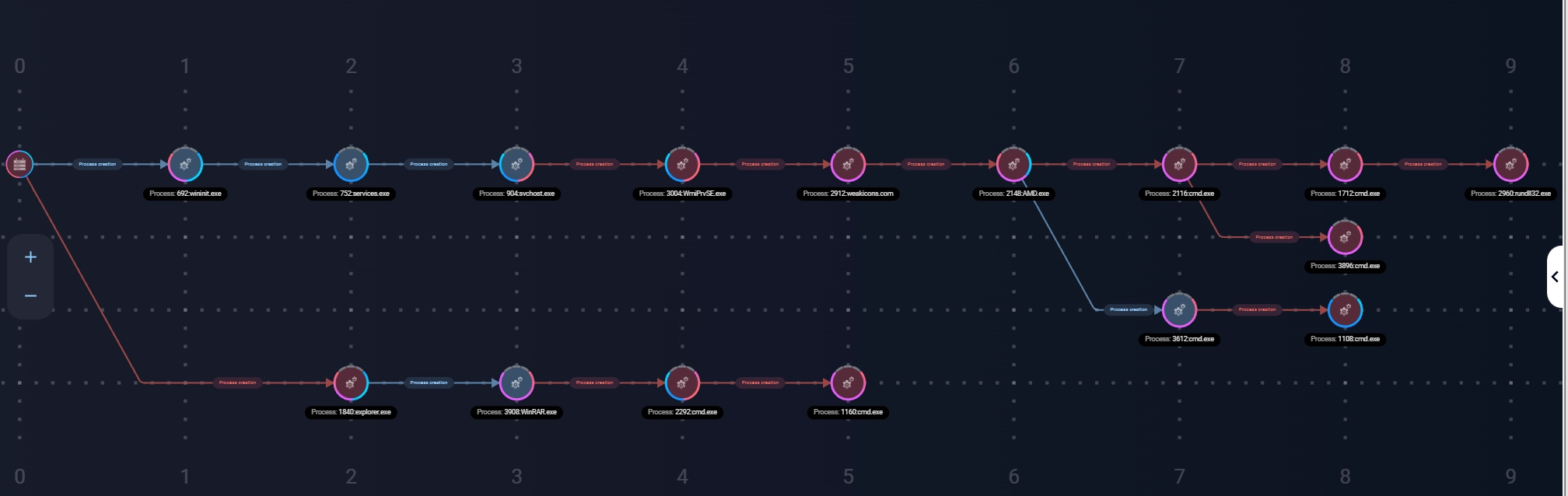
The maintainers of the WinRAR file archiving utility have released an update to address an actively exploited zero-day vulnerability.
Tracked as CVE-2025-8088 (CVSS score: 8.8), the issue has been described as a case of path traversal affecting the Windows version of the tool that could be exploited to obtain arbitrary code execution by crafting malicious archive files.
“When extracting a file, -
New Win-DDoS Flaws Let Attackers Turn Public Domain Controllers into DDoS Botnet via RPC, LDAP
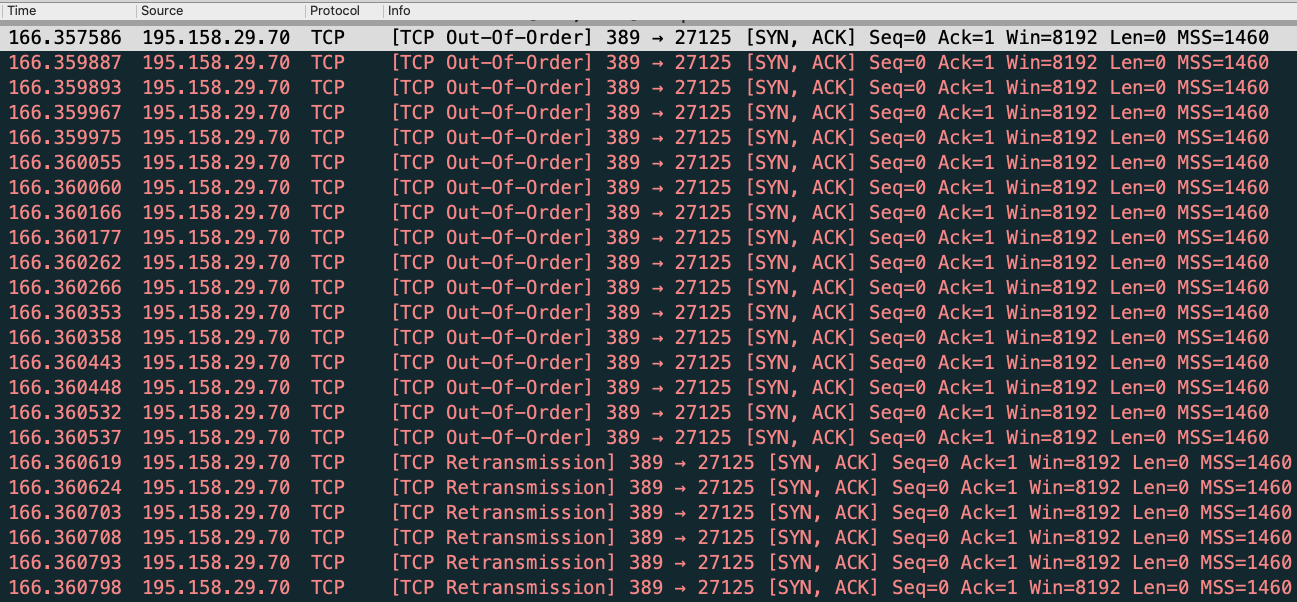
A novel attack technique could be weaponized to rope thousands of public domain controllers (DCs) around the world to create a malicious botnet and use it to conduct power distributed denial-of-service (DDoS) attacks.
The approach has been codenamed Win-DDoS by SafeBreach researchers Or Yair and Shahak Morag, who presented their findings at the DEF CON 33 security conference today.
“As we -
Researchers Detail Windows EPM Poisoning Exploit Chain Leading to Domain Privilege Escalation
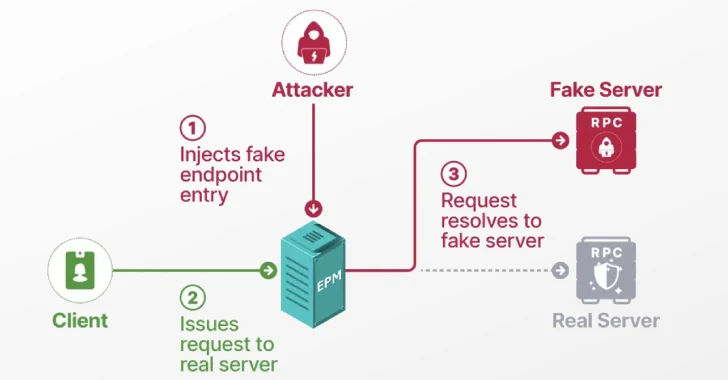
Cybersecurity researchers have presented new findings related to a now-patched security issue in Microsoft’s Windows Remote Procedure Call (RPC) communication protocol that could be abused by an attacker to conduct spoofing attacks and impersonate a known server.
The vulnerability, tracked as CVE-2025-49760 (CVSS score: 3.5), has been described by the tech giant as a Windows Storage spoofing bug -

Building a Smart Data Retention Policy: What Your Small Business Needs to Keep (and Delete)
Does it ever seem like your small business is overwhelmed with data? This is a very common phenomenon. The digital world has transformed how small businesses operate. We now have an overwhelming volume of information to manage employee records, contracts, logs, financial statements, not to mention customer emails and backups.
A study by PR Newswire shows that 72% of business leaders say they’ve given up making decisions because the data was too overwhelming.
If not managed properly, all this information can quickly become disorganized. Effective IT solutions help by putting the right data retention policy in place. A solid data retention policy helps your business stay organized, compliant, and save money. Here’s what to keep, what to delete, and why it matters.
What Is a Data Retention Policy and Why Should You Care?
Think of a data retention policy as your company’s rulebook for handling information. This shows how long you hold on to data, and when is the right time to get rid of it. This is not just a cleaning process, but it is about knowing what needs to be kept and what needs to be deleted.
Every business collects different types of data. Some of it is essential for operations or for legal reasons. Other pieces? Not so much. It may seem like a good idea to hold onto data, but this increases the cost of storage, clutters the systems, and even creates legal risks.
Having a policy not only allows you to keep what’s necessary but lets you do so responsibly.
The Goals Behind Smart Data Retention
A good policy balances data usefulness with data security. You want to keep the information that has value for your business, whether for analysis, audits, or customer service, but only for as long as it’s truly needed.
Here are the main reasons small businesses implement data retention policies:
- Compliance with local and international laws.
- Improved security by eliminating outdated or unneeded data that could pose a risk.
- Efficiency in managing storage and IT infrastructure.
- Clarity in how and where data lives across the organization.
And let’s not forget the value of data archiving. Instead of storing everything in your active system, data can be tucked away safely in lower-cost, long-term storage.
Benefits of a Thoughtful Data Retention Policy
Here’s what a well-planned policy brings to your business:
Lower storage costs: No more paying for space used by outdated files.
Less clutter: Easier access to the data you do need.
Regulatory protection: Stay on the right side of laws like GDPR, HIPAA, or SOX.
Faster audits: Find essential data when regulators come knocking.
Reduced legal risk: If it’s not there, it can’t be used against you in court.
Better decision-making: Focus on current, relevant data, not outdated noise.
Best Practices for Building Your Policy
While no two businesses will have identical policies, there are some best practices that work across the board:
- Understand the laws: Every industry and region has specific data requirements. Healthcare providers, for instance, must follow HIPAA and retain patient data for six years or more. Financial firms may need to retain records for at least seven years under SOX.
- Define your business needs: Not all retention is about legal compliance. Maybe your sales team needs data for year-over-year comparisons, or HR wants access to employee evaluations from the past two years. Balance legal requirements with operational needs.
- Sort data by type: Don’t apply a one-size-fits-all policy. Emails, customer records, payroll data, and marketing files all serve different purposes and have different retention lifespans.
- Archive don’t hoard: Store long-term data separately from active data. Use archival systems to free up your primary IT infrastructure.
- Plan for legal holds: If your business is ever involved in litigation, you’ll need a way to pause data deletion for any records that might be needed in court.
- Write two versions: One detailed, legal version for compliance officers, and a simplified, plain-English version for employees and department heads.
Creating the Policy Step-by-Step
Ready to get started? Here’s how to go from idea to implementation:
- Assemble a team: Bring together IT, legal, HR, and department heads. Everyone has unique needs and insights.
- Identify compliance rules: Document all applicable regulations, from local laws to industry-specific guidelines.
- Map your data: Know what types of data you have, where it lives, who owns it, and how it flows across systems.
- Set retention timelines: Decide how long each data type stays in storage, gets archived, or is deleted.
- Determine responsibilities: Assign team members to monitor, audit, and enforce the policy.
- Automate where possible: Use software tools to handle archiving, deletion, and metadata tagging.
- Review regularly: Schedule annual (or bi-annual) reviews to keep your policy aligned with new laws or business changes.
- Educate your staff: Make sure employees know how the policy affects their work and how to handle data properly.
A Closer Look at Compliance
If your business operates in a regulated industry, or even just handles customer data, compliance is non-negotiable. Examples of data retention laws from around the world include:
- HIPAA: Healthcare providers must retain patient records for at least six years.
- SOX: Publicly traded companies must keep financial records for seven years.
- PCI DSS: Businesses that process credit card data must retain and securely dispose of sensitive information.
- GDPR: Any business dealing with EU citizens must clearly define what personal data is kept, why, and for how long.
- CCPA: California-based or U.S. companies serving California residents must provide transparency and opt-out rights for personal data.
Ignoring these rules can lead to steep fines and reputational damage. A smart IT service provider can help navigate these regulations and keep you compliant.
Clean Up Your Digital Closet
Just like you wouldn’t keep every receipt, email, or post it note forever, your business shouldn’t hoard data without a good reason. A smart, well-organized data retention policy isn’t just an IT necessity, it’s a strategic move for protecting your business, lowering costs, and staying on the right side of the law.
IT solutions aren’t just about fixing broken computers; they’re about helping you work smarter. And when it comes to data, a little organization goes a long way. So don’t wait for your systems to slow down or a compliance audit to hit your inbox.
Contact us to start building your data retention policy today and take control of your business’s digital footprint.
—
This Article has been Republished with Permission from The Technology Press.
- Compliance with local and international laws.
-

Linux-Based Lenovo Webcams’ Flaw Can Be Remotely Exploited for BadUSB Attacks
Cybersecurity researchers have disclosed vulnerabilities in select model webcams from Lenovo that could turn them into BadUSB attack devices.
“This allows remote attackers to inject keystrokes covertly and launch attacks independent of the host operating system,” Eclypsium researchers Paul Asadoorian, Mickey Shkatov, and Jesse Michael said in a report shared with The Hacker News.
The -

Researchers Uncover GPT-5 Jailbreak and Zero-Click AI Agent Attacks Exposing Cloud and IoT Systems
Cybersecurity researchers have uncovered a jailbreak technique to bypass ethical guardrails erected by OpenAI in its latest large language model (LLM) GPT-5 and produce illicit instructions.
Generative artificial intelligence (AI) security platform NeuralTrust said it combined a known technique called Echo Chamber with narrative-driven steering to trick the model into producing undesirable -

CyberArk and HashiCorp Flaws Enable Remote Vault Takeover Without Credentials
Cybersecurity researchers have discovered over a dozen vulnerabilities in enterprise secure vaults from CyberArk and HashiCorp that, if successfully exploited, can allow remote attackers to crack open corporate identity systems and extract enterprise secrets and tokens from them.
The 14 vulnerabilities, collectively named Vault Fault, affect CyberArk Secrets Manager, Self-Hosted, and -

AI Tools Fuel Brazilian Phishing Scam While Efimer Trojan Steals Crypto from 5,000 Victims
Cybersecurity researchers are drawing attention to a new campaign that’s using legitimate generative artificial intelligence (AI)-powered website building tools like DeepSite AI and BlackBox AI to create replica phishing pages mimicking Brazilian government agencies as part of a financially motivated campaign.
The activity involves the creation of lookalike sites imitating Brazil’s State